Photography
Yves Gellie
Robots. The mere mention of this word is enough to conjure up a whole world of imagination, nurtured since Mary Shelley by a literature soon recognized as science fiction, and sustained by a countless filmography. In 2008, Yves Gellie began visiting major scientific laboratories around the world developing humanoid robotics programs. He discovered the universe in which these android avatars take shape, and thus come to life, destined, among other things, for the military, healthcare, and personal assistance sectors. Reality often surpasses fiction, and the photographs he brings back from his investigations in the research environment are true portraits—often excluding human presence—taken within the laboratory setting, the primordial garden where a new species is being born. Paradoxically, the concerns of researchers today converge with those imagined by science fiction; In 2007, the Korean parliament drew inspiration from the work of Isaac Asimov to formalize a series of laws establishing the relationship between humans and robots !
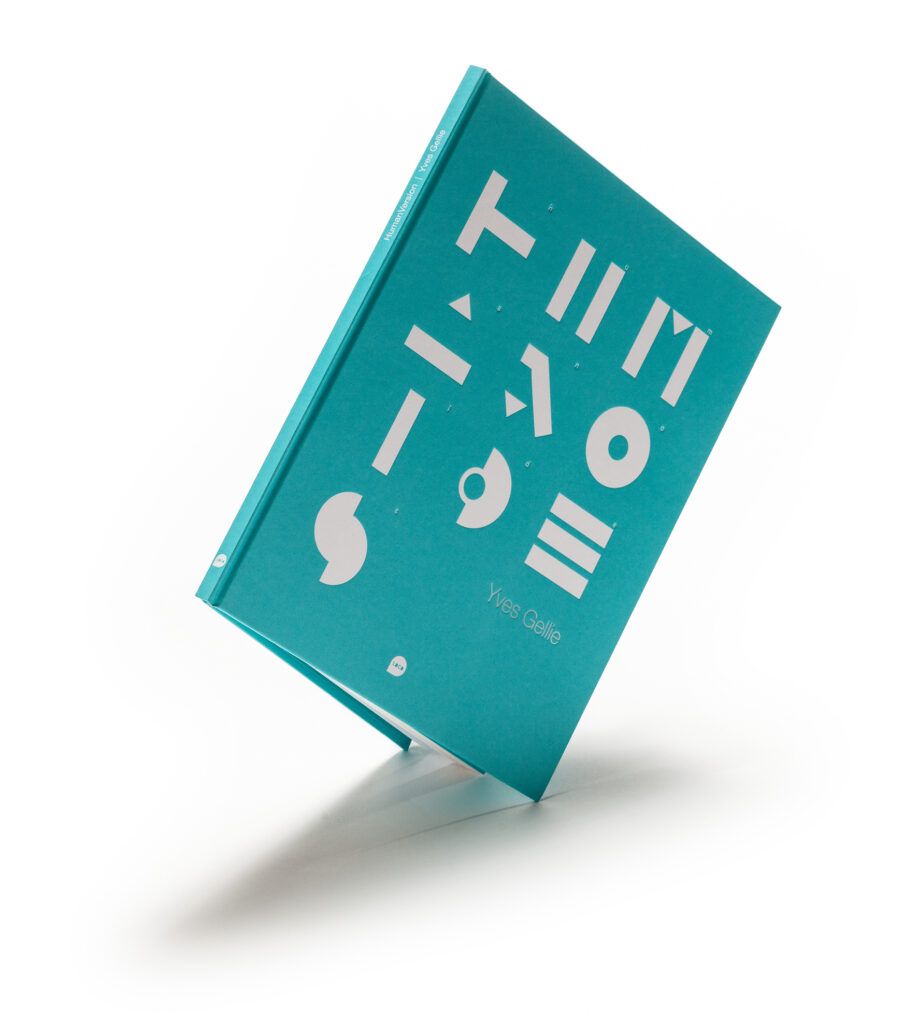
Conceived as a true artist’s book, the reader discovers, after a brief introduction, Yves Gellie’s photographs reproduced in large format, followed by an interview between the photographer and the philosopher Jean-Michel Besnier.
This book was published with the support of the agnès b. Endowment Fund and the company Fiber.
Human version, 28 x 35 cm, 60 pages, 24 full-color reproductions, hardcover with embossing, French / English Graphic design: Danish Pastry Design
« Notre sentiment d’identité ne serait qu’une fiction, une sorte de scène de théâtre sur laquelle défilent des perceptions toujours en mouvement et auxquelles nous prêtons après coup une illusoire stabilité. »
David Hume