Photography
Marie-Pierre Dieterlé
Marie-Pierre Dieterlé began exploring the Cité Gagarine in 2009. Built in 1961 in Ivry-sur-Seine, it became a symbol of the red suburbs and a showcase for the French Communist Party, of which Ivry was the historic stronghold. It was the dawn of social housing, full of hope and utopian ideals. Entire families were able to leave the slums and benefit from a minimum standard of rental accommodation: an apartment with hot water, toilets, and heating. In June 1963, a visit by Russian cosmonaut Yuri Gagarin helped to forge the myth of a housing project unlike any other. Amidst the general jubilation and bouquets of flowers, the Soviet cosmonaut planted a tree in memory of his visit…
Then, like many housing projects in the Paris suburbs, the dream began to crumble. In the 1990s, the Gagarine housing project was classified as a sensitive urban area (ZUS). This urban policy label, which was supposed to give priority to these areas, became a stigma of social, economic, and geographical segregation. Demolition gradually became inevitable. All the families had to be rehoused.
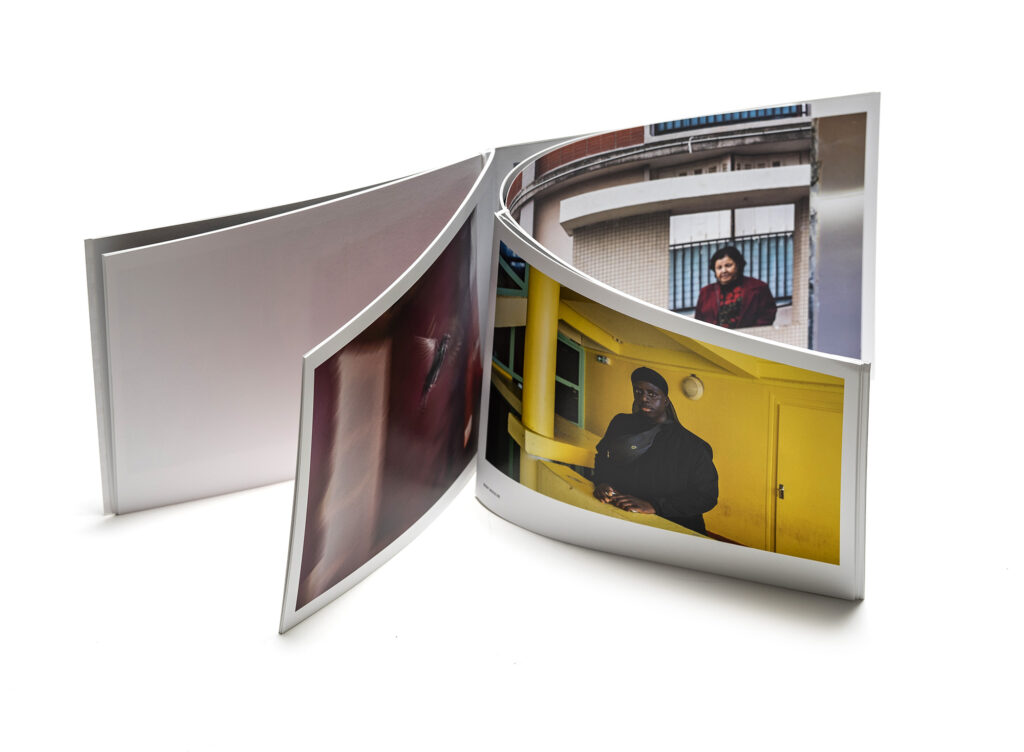
By 2017, only about 100 of the housing complex’s 380 units remained occupied. For two years, she wandered the long, half-empty corridors in search of faces to immortalize. Then she followed the stages of ecological deconstruction as the building was gradually dismantled until the last red brick disappeared.
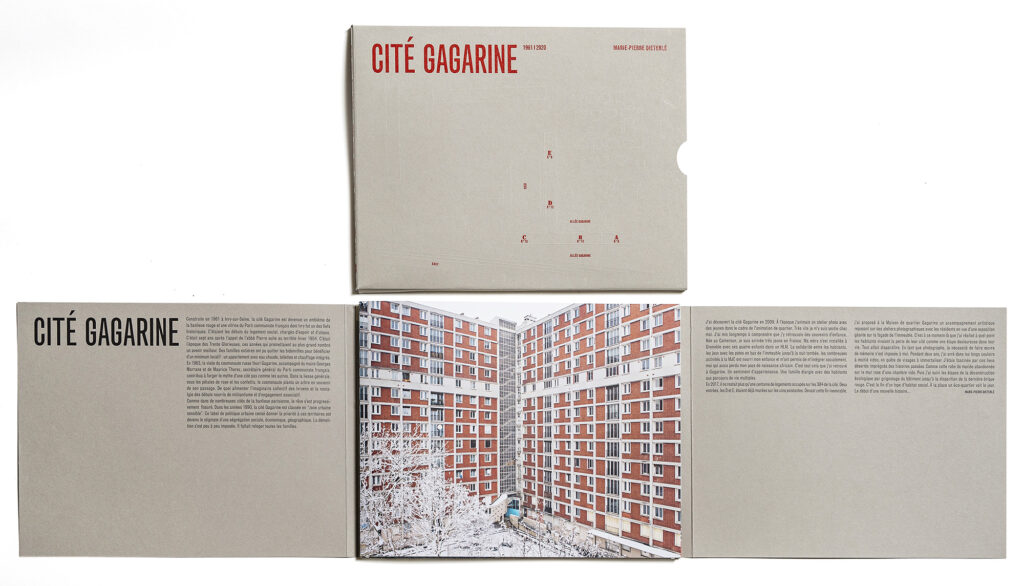
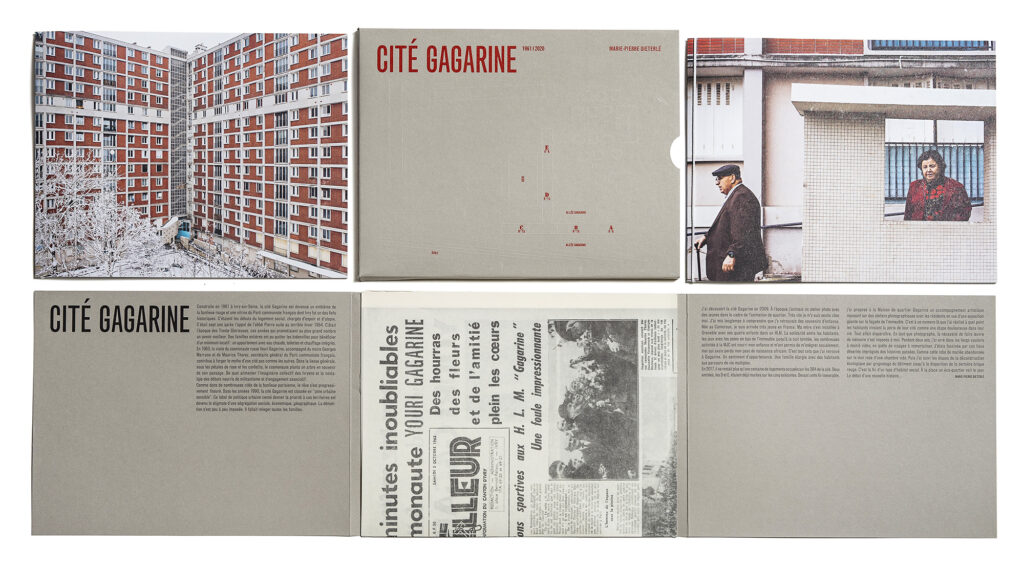
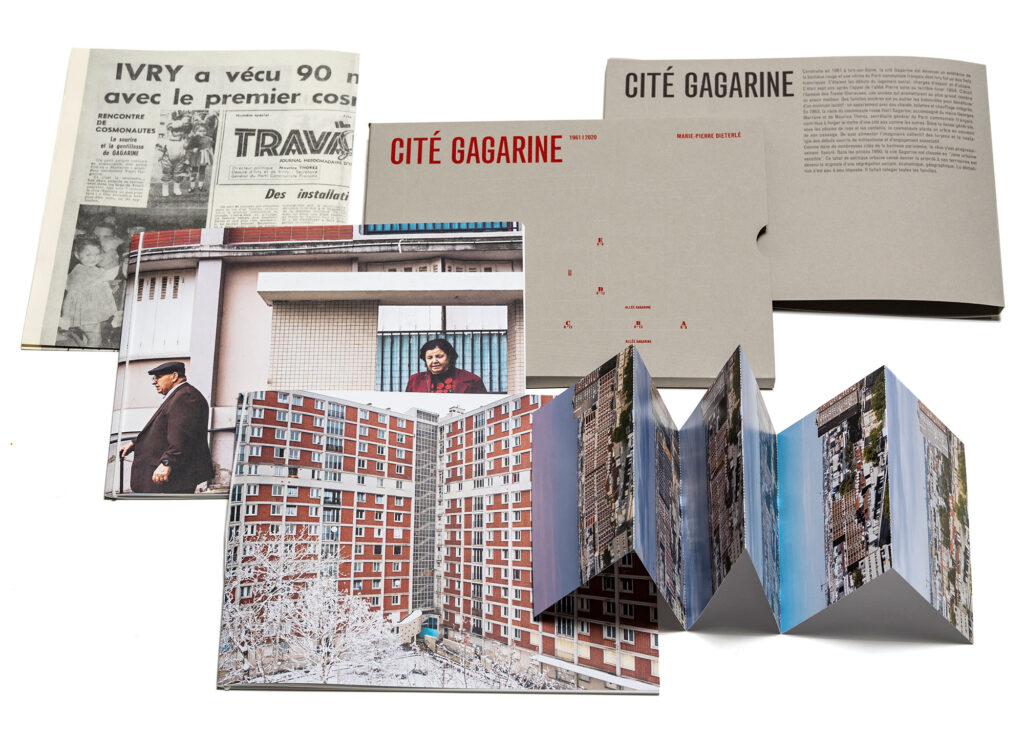
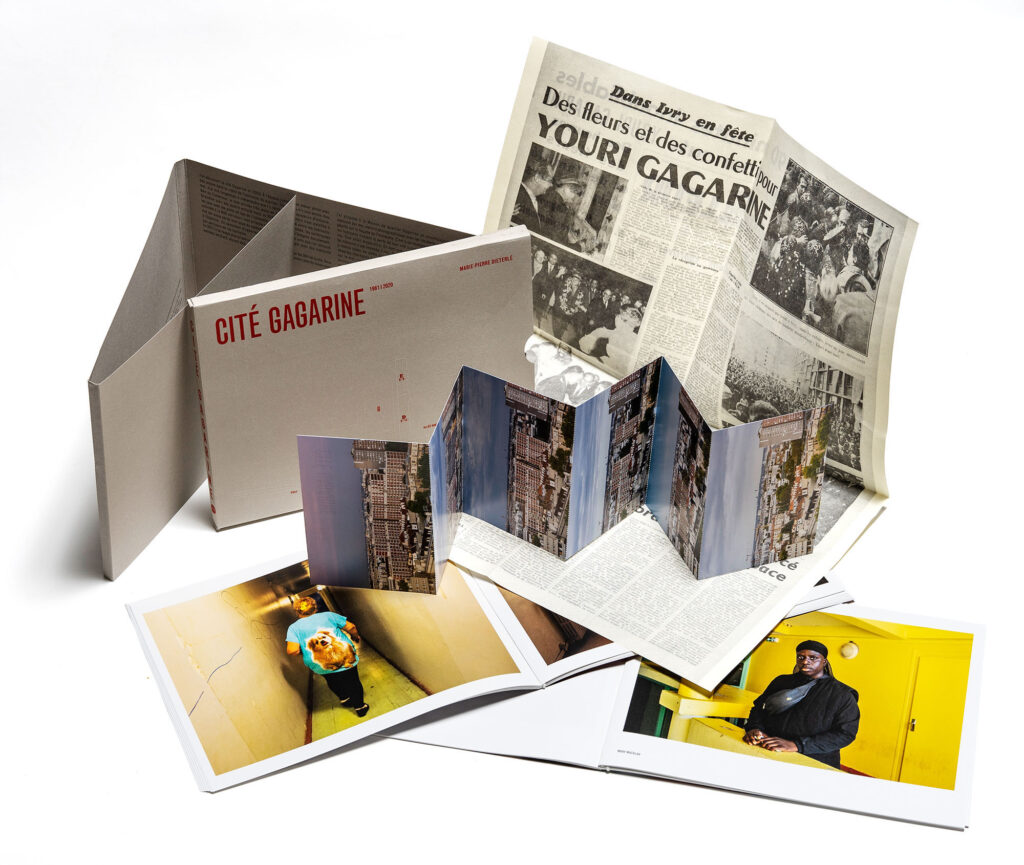
Cité Gagarine 1961-2020, 2 books, 28 x 22 cm, 2 photo booklets, 44 pages each + 1 leporello with 6 postcards + 1 facsimile of a folded newspaper, all in a sleeve, enclosed in a case, 80 four-color reproductions. Graphic design: Laurence Chéné Sold out