



Anne-Marie Proulx
photographe
Née à Lévis en 1984, Anne-Marie Proulx vit et travaille à Québec. En faisant converser les images et les mots, elle crée des univers poétiques qui puisent dans nos conversations avec les territoires, et dans nos relations avec le langage. Son travail récent a fait l’objet de nombreuses expositions individuelles au Québec et notamment à Espaces F (Matane, 2020), à Vaste et Vague (Carleton-sur-mer, 2019), à la Maison de la littérature dans le cadre de Manif d’art 9 – la biennale de Québec (Québec, 2019), à la Galerie des arts visuels de l’Université Laval (Québec, 2018), à Occurrence dans le cadre de MOMENTA biennale de l’image (Montréal, 2017), et à YYZ (Toronto, 2017). Ses oeuvres ont aussi circulé à l’international au sein d’expositions collectives présentées à Stryx (Birmingham, UK, 2019), à Xhibit, espace d’exposition de l’Académie des beaux-arts de Vienne (Autriche, 2019) ainsi qu’au FRAC Lorraine (Metz, France, 2018). Son travail a également été présenté dans plusieurs événements et expositions collectives (Rencontres internationales de la photographie en Gaspésie, Arprim, Regart, AdMare, Fonderie Darling, Galerie UQO, Capture Photography Festival). Ses textes ont été publiés dans différentes publications et revues et elle a présenté des conférences tant au Québec qu’à l’étranger. Elle est par ailleurs codirectrice de VU, centre de diffusion et de production de la photographie à Québec.
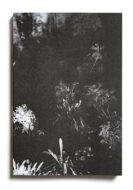
Le jardin d’après
Anne-Marie Proulx
Anne-Marie Proulx constructed her photography book by following the journey of the protagonist in Anne Hébert's novel Le premier jardin (1988). She draws freely on the novel's depiction of a New World city as seen through the eyes of a theater actress haunted by the women who came before her, as well as the roles she herself has played throughout her career and personal life.
Le premier jardin is a land on which sits a city that is never named, that is almost invisible, but in which there are the beginnings of stories, pieces of truth and fiction as intangible as the light that falls on a wall, on the surface of the water, or on trees in bloom. Through the details of textures, lights, and a life that touches the streets and buildings, the city reveals itself as a character, like a woman's body. In this garden planted behind the grand facades lie dormant invasive roles, ephemeral, seasonal, and enduring lives.
Le jardin d’après
14×20.5 cm, 192 pages, approximately 125 reproductions, paperback with dust jacket
Graphic design: Marie Tourigny
ISBN: 9782843140426